Wednesday, December 24, 2014

Day Five: Review Writing

https://farm3.static.flickr.com/2030/2328829160_186d9a80bc.jpg


In today's class, we will discuss what I consider to be the most enjoyable task type on the CAE exam: the review. Review writing is different from essay writing in a lot of ways. But, as we'll see over the course of our discussion today, there are also similarities between these two types of writing. An outline for today's class can be found below: 

Day Five: Review Writing
Objectives: Students will be able to...
  1. Identify several different types of review topics and associated vocabulary
  2. Identify several features common to all types of review writing 
  3. Identify the structure of a story-based (movie/book/play) review
  4. Use key vocabulary to describe a story
  5. Produce a short review of their own based on an example 
I. Intro to the Class
How are you? How are things? What's new? Who has done anything fun since our last meeting? How are your other classes going? Do you have any questions?

II. Vocabulary Quiz 
Time to "face the music"!

III. Review Writing Example & Brainstorm
Let's begin by reading this review about the recent movie, The Dark Knight directed by Christopher Nolan and stary Christian Bale. After reading the review, as a class, let's brainstorm what you already know about review writing using the following questions:
  1. What is the purpose of review writing? Is there more than one purpose? 
  2. How would you describe the actual writing? Is it objective? Subjective? Persuasive? Casual?
  3. What are some different topics for review writing? 
  4. What are the characteristics of a good review? 
  5. What are some key vocabulary words/expressions associated with review writing? 
IV. Review Writing: An Overview
Now, let's review the essential components of a good review (as well as the process for writing one) using this presentation 

To review, writing a good review for the CAE exam involves...
  1. Keeping the content of your review relevant 
  2. Being sure to completely answer the question (or questions)
  3. Striving to express yourself clearly
  4. Following a clear pattern of organization (Hook -> Synopsis -> Pros or Cons -> Final Recommendation)
  5. Having fun! Take some chances, use some descriptive expressions, show enthusiasm (lack thereof). Remember, a review is your opinion of something, so don't be afraid to express yourself.
V. Review Writing: Vocabulary & Practice
Now, with a partner, complete the first part of this exercise that asks you to categorize useful vocabulary based on the kind of review you might use it in. 

After completing Part One, we will watch a short film called "Alma". This was be the basis for Part Two of the practice. 

VI. Additional Practice: Review Resources
Below you will find a few example reviews. Take a look and analyze them carefully for 1). similarities and differences (based on the subject matter) and 2). interesting linguistic conventions, phrases and/or expressions. (These websites (and more) can also be found inside the

Music Reviews: Pitchfork
Movie Reviews: Rotten Tomatoes
Restaurant Reviews: Zagat
Travel Stops: Trip Advisor

VII. Homework
Don't forget to check the "Homework Tracker" for this week's assignments! 

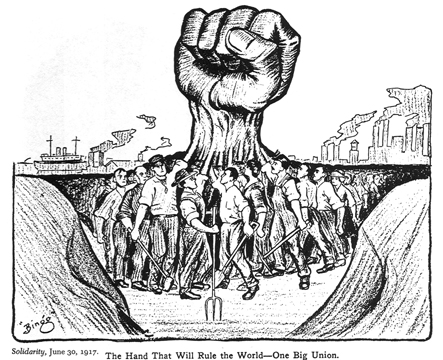
A Brief History of International Workers Day (or, "Happy May First!")


I hope you all enjoyed the May 1st holiday on Friday. I did a little digging and found out that the May 1st holiday celebrating workers that is celebrated around the world is connected with a famous event in U.S. history: the Haymarket Affair, a series of events and violence surrounding protests made by workers in favor of 8 hour working days that took place in May of 1886 in Chicago, Illinois. 

You can find out more about this important event here. It is an interesting read about another connection between the histories of our two countries. 

Hopefully, you enjoyed your long weekend. I hope you have a great start to the week!  

Tuesday, December 23, 2014

Day Six: Report Writing


This week will be discussing how to create a complete, well-written CAE style report. While some of the CAE tasks are a little artificial, report writing is a skill required by many jobs in a wide variety of fields. With reporting writing, we will transition back to a more formal, objective style of writing (similar to essay writing). An outline for today's class can be found below: 

Day Six: Report Writing
Objectives: Students will be able to... 
  1. Explain the basic features of a CAE-style report
  2. Create a list of useful expressions for CAE-style report writing
  3. Create a reverse outline based on an example CAE-style report
  4. Apply class discussions on report related vocabulary and structure to produce their own, CAE-style report based on a prompt provided by the instructor
I. Intro to the Class
How are you? How are things? What's new? Did anyone do anything fun over the weekend? How are your other classes going? Do you have any questions about what we're doing in this class? 

II. Vocabulary Quiz 
I hope you studied :) 

III. CAE Report Writing: Introductory Questions
You will be put into small groups and asked to answer a few questions that will allow you to share what you already know about report writing. After your small group discussions, you will be asked to share your answers with the class. 

IV. Reverse Outlining an Example Report
Now, let's take a look at an example report on environmental threats facing Germany. Follow these steps:
  1. Read the example and pay attention to its structure
  2. Get into groups and discuss the main features of the report
  3. Create a "reverse outline" - this means you will create a "skeleton" for this kind of writing and tell what kind of major information should be included and where it should go
  4. Prepare to share your findings with the group
After you've finished discussing with your group, you'll be asked to share you findings with the group.

V. Report Structure and Useful Terms
Now that we've had a chance to discuss how to write a report, here is a basic outline structure and some key vocabulary to help you fill in the "skeleton". 

VI. Report Writing: Mini-Practice
Now, to practice what we've discussed in class, respond to this prompt with a partner. The structure has been given to you this time. In future assignments, you will have to provide it yourself! 

VII. Homework
Don't forget to check the "Homework Tracker" for this week's assignments! 
Wednesday, December 17, 2014

Happy Victory Day! с великим праздником 9 мая!


I just wanted to share my best wishes to everyone in class for a wonderful "Victory Day" weekend. I myself lived out a life long dream by attending the world famous "Victory Day" parade here in Moscow yesterday. It was a very impressive event. In addition to seeing all of the different vehicles and planes of the Russian military, it was so inspiring to be around so many positive, happy and smiling faces. 

I have learned a lot about the Russian role in the war and the immense sacrifices made by the Russian people. More than anything, all of the information I've learned has helped to reinforce my belief that, in addition to being wonderful hosts and kind, intelligent students and teachers, Russian people are also strong, determined and fiercely loyal. I feel lucky to have been able to live and work among such people for much of the last year. 

While "World War Two"/"the Great Patriotic War" ended 70 years ago, the world is still not free from conflict. Maybe it will never be. But, it is my firm belief that by learning other languages and immersing ourselves in new cultures, we are acquiring the skills necessary to build better, stronger and longer lasting relationships between individuals and nations. 

To put it in other, better words, President John F. Kennedy once said, "As we express our gratitude, we must never forget that the highest form of appreciation is not to utter words, but to live by them". By dedicating yourselves to learning new languages and cultures, you guys are all "living" the belief that positive is change is possible if you try hard. For that, I am really proud of you all! 

Let's keep working hard to continue making the world a better place, not just for ourselves, our families and our friends, but for everyone, especially people like this little guy I saw at the parade. 

Sunday, December 7, 2014

The Power of Words


I received an email from my family recently and in it, my family linked me to this video. He did so because he knows how much I like words and because we both believe that the ability to choose the right words for the right occasion/purpose is a certain kind of power. As we talk about this idea a lot in class, I thought I would share the video with you guys, too. 

Friday, December 5, 2014

Day Seven: Letter Writing


In today's class, we will talk about the conventions, patterns and terms used for writing (in)formal letters and emails. To give our discussions some context, we will use the "advice column" format to highlight a few different language considerations (...and to have some fun!). An outline for todays class can found below:

Day Seven: Letter Writing
Objectives: Students will be able to...
  1. Describe the format of a basic letter/email in English
  2. Compare and contrast the requirements for a formal and informal letter 
  3. Define the concept of "hedging" and give examples on how to "hedge"
  4. Write a short response to an advice column query using a letter format
  5. Write an academic email 
I. Intro to the Class
How are you? What's new? How was the weekend? Did anyone do anything new, fun or exciting? How are your other classes going? Do you have any questions for me?

II. Vocabulary Quiz
Hey, at least it's on "beautiful words" this week ;)

III. Letter Writing: Elicitation 
With a partner, share answers to the following questions:
  1. What do you know about (in)formal letter writing? 
  2. What do you want to know about letter writing? 
  3. Why is letter writing an important skill for you to master? 
IV. Letter Writing: Advice Columns (Overview) 
Now we will go through this overview on writing letters for advice columns. Within this short workshop, we will discuss the concept of advice columns, popular advice column topics and useful language for giving advice. You will also have a chance to practice writing advice to someone in need.

V. Letter Writing: Advice Columns (Practice)
Now, you will pick a scenario at random from this list and respond to it. After responding, you'll be asked to get into groups based on the number of your scenario. Once in your group, you will be asked to share your advice for the particular situation. After everyone has shared their advice, you will choose the "best" advice (the funniest, the craziest, the most practical, etc.) and explain to the class why you chose this advice.

VI. Email Writing
This short presentation provides a basic overview to writing academic emails. We will review this information and then read through this handout (which includes your homework assignment).

VII. Homework 
I will send out an email with the homework assignment for our final class together! *Spoiler alert* be sure to review your old vocabulary quizzes!

Sunday, November 30, 2014

Day Eight: Proposal Writing


In our final class together, we will discuss the features of an effective proposal. Common to many different genres of writing, proposals are designed to outline a problem and propose and justify possible solutions. An outline for today's class can be found below: 

Day Eight: Proposals
Objectives: Students will be able to... 
  1. Identify the commonly accepted audience(s), purpose and tone for a CAE-style proposal
  2. Describe the basic structure of a CAE style proposal 
  3. Analyze a CAE-style proposal example 
  4. Create an outline for their own CAE-style proposal 
I. Introduction to the Class
How are you? How are things? What's new? Did anyone do anything fun over the weekend? How is the studying for your exams coming along? Do you have any questions? 

II. Final Vocabulary Quiz 
MWAHAHAHAHA! (Just kidding...) 

III. CAE Proposals: Eliciting Knowledge
As a class, let's discuss what you already know about proposals. Some possible questions to help us accomplish this task include: 
  1. Why do we write proposals (what is their "purpose")?
  2. Who do we usually write proposals for (who's the "audience")? 
  3. How do we usually write proposals (what kind of tone do we use? What is the general structure?) 
IV. CAE Proposals: An Overview, An Example and Practice
Now, let's take a look at this sheet that gives us the basic information for writing a proposal. After discussing the overview information, let's take a look at the example proposal and discuss it. 

Finally, there is a practice scenario. We will use this practice scenario in the following way: 
  1. Read the scenario prompt and create an outline for your proposal. The outline should include headings and a few basic ideas
  2. Share your outline with a classmate. Compare and contrast your work, paying attention to similarities and differences between your approaches.
  3. Volunteers will have the opportunity to share their outline with the class. 

V. Personality Testing
Finally, as it is our last day together, let's have a little fun. We will do some "personality" testing using the following procedure: 

Step One: Brainstorming personality adjectives (both positive and negative). If you need help, check out this list:

Step Two: Personality Testing: Which Color Are You?

This process has three steps, which are outlined below. Remember: 4 is the Most Like You (3 is kind of like you, 2 isn't really like and 1 is not like you at all). You need to put a number for each option!
  1. Complete the COLOR QUESTIONNAIRE
  2. Review and rank (1-4) the "Color DESCRIPTIONS"
  3. Review and rank (1-4) the "Color IMAGES"
Once you finish these three tasks, you need to calculate your high score. You score will indicate which COLOR your personality is :) Once you have this information, we can proceed to Step Three...

Step Three: Preparing Personality Presentations (to be explained in class)

Step Four: Delivering Personality Presentations (self-explanatory :) )

Step Five: Reviewing the Results (in-class discussion... I will link the materials after we've talked about them together).

Materials from the COLOR TEST
Colors and Personality Results PPT
Personality Colors Article

VI. Homework
There is no "official" homework from this class! However, I want to mention two things: 
  1. As you are studying for your CAE exam, if you have any questions (about any of the sections or just about the exam in general), please feel free to write me an email. 
  2. Students who attended at least half of our classes together will receive a certificate of participation. These certificates will be ready be next Tuesday (June 2nd). If you cannot make it then, please let me know and I will find a way to get your certificate to you. 
Best of luck to you all in your future English language learning journeys! I hope our paths cross again soon :)